

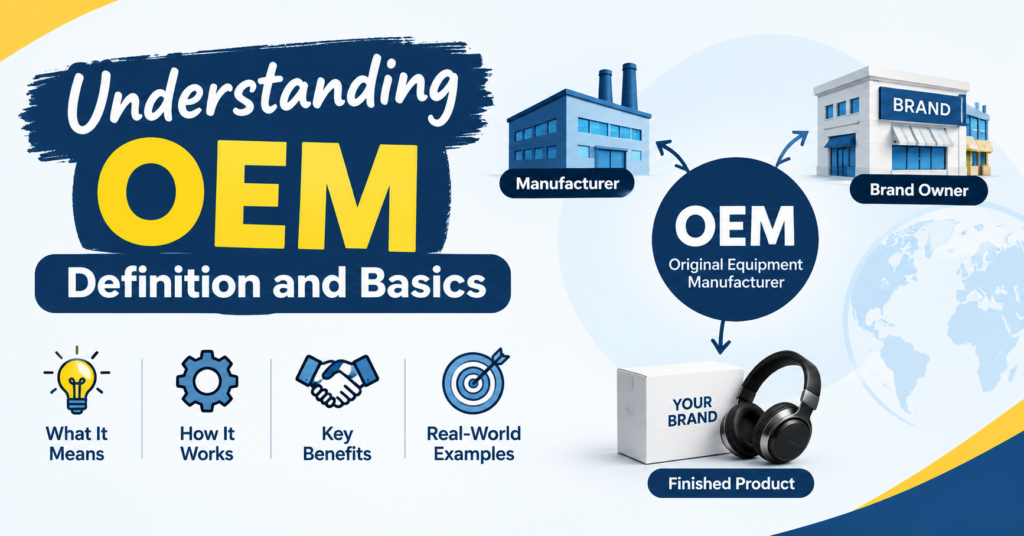
OEM stands for Original Equipment Manufacturer. It refers to a company that makes parts or products used by another company. That other company then sells the finished product under its own brand. It’s a common setup in industries like electronics, cars, and computers. This term often causes confusion because of how it’s used today. Many people now use OEM to describe the part itself, not just the maker. For example, an “OEM part” means it came from the original manufacturer. This is different from aftermarket parts made by other companies. Understanding OEM helps when buying replacement parts or new products. It tells you where something really came from. Knowing this can affect quality, price, and warranty. This guide breaks down what OEM means and how it works in simple terms.
What Does OEM Stand For?
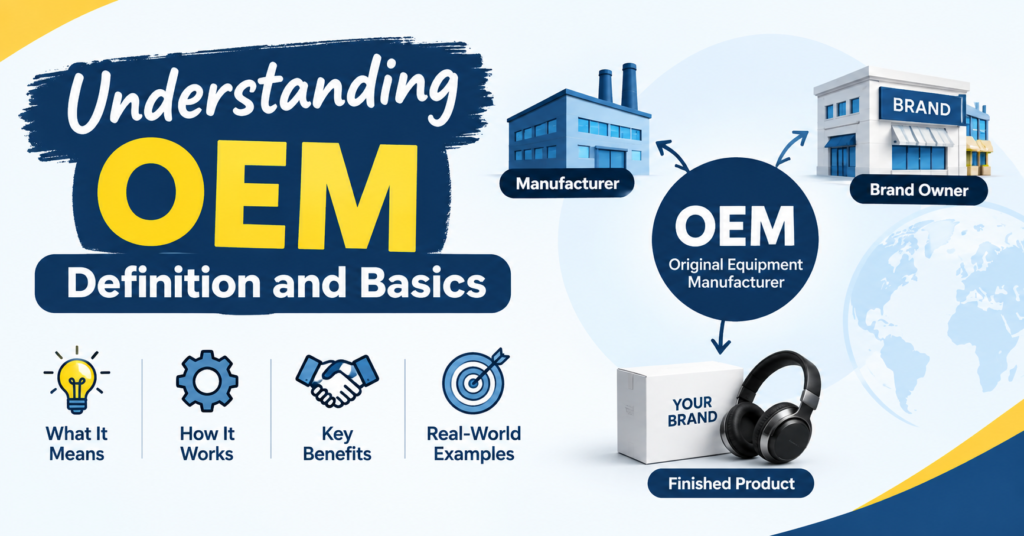
OEM is short for Original Equipment Manufacturer. It refers to a company that designs and produces parts or products that are used inside another company’s finished goods. The company that buys these parts and sells the final product is often called a Value-Added Reseller (VAR). The VAR adds extra features, branding, or packaging before the product reaches the end customer.
A simple way to picture it:
- OEM → makes the part (e.g., a processor chip)
- VAR → buys the part, builds the final product, adds a brand name
- Customer → buys the finished product from the VAR
This relationship works well for both sides. The OEM gets a steady buyer for its parts, and the VAR saves the time and cost of building everything from scratch.
OEM vs. Aftermarket: What’s the Difference?
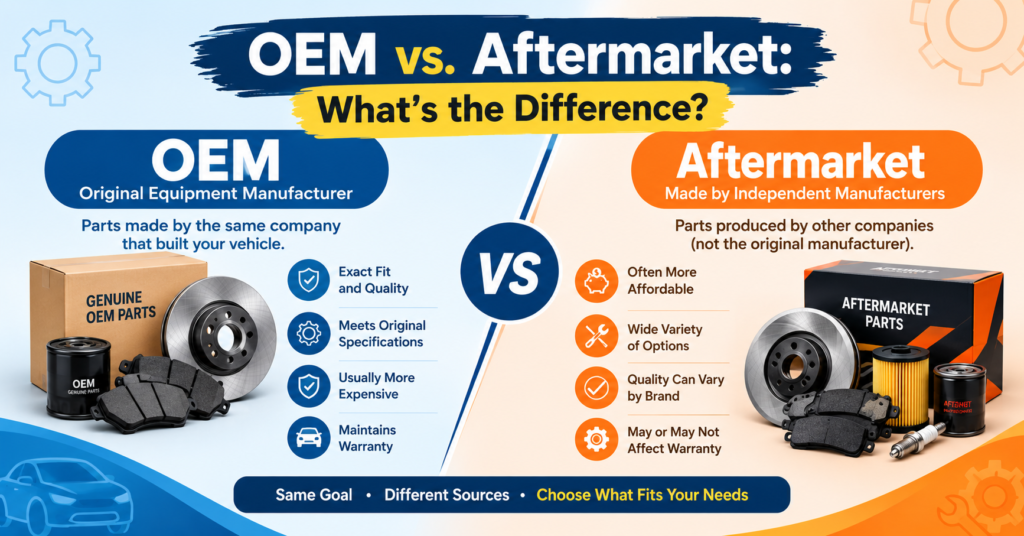
People often confuse OEM parts with aftermarket parts, but they come from very different sources. Here’s a clear breakdown.
| Feature | OEM Parts | Aftermarket Parts |
|---|---|---|
| Made by | The original manufacturer of the part | A different, third-party company |
| Design | Matches the exact original specifications | Designed to fit or work similarly |
| Price | Usually higher | Usually lower |
| Warranty | Often backed by the original brand | Varies by manufacturer |
| Availability | Sometimes limited or brand-specific | Widely available from many sellers |
| Quality consistency | Very consistent, factory-tested | Can vary between brands |
OEM parts are built to the exact specifications used in the original product. Aftermarket parts are made by outside companies to fit or perform similarly, but they aren’t produced or approved by the original manufacturer. This is why OEM parts usually cost more you’re paying for guaranteed compatibility and consistent quality.
How Does OEM Work in Manufacturing?
OEM manufacturing usually follows a simple, repeatable process. Understanding these steps makes the whole relationship easier to picture.
- Design and specification A brand decides what it needs, such as a specific type of battery or circuit board.
- OEM production The OEM manufactures the part exactly to those specifications.
- Supply to the buyer The finished parts are shipped to the buying company (the VAR).
- Assembly and branding The VAR integrates the parts into its own product and adds its brand name.
- Sale to the customer The final product reaches store shelves or online listings under the VAR’s name, not the OEM’s.
This setup is common because it lets brands focus on design, marketing, and assembly, while OEMs focus on efficient, large-scale part production. It’s essentially a form of outsourcing that keeps costs down for everyone involved.
Common Examples of OEM Products
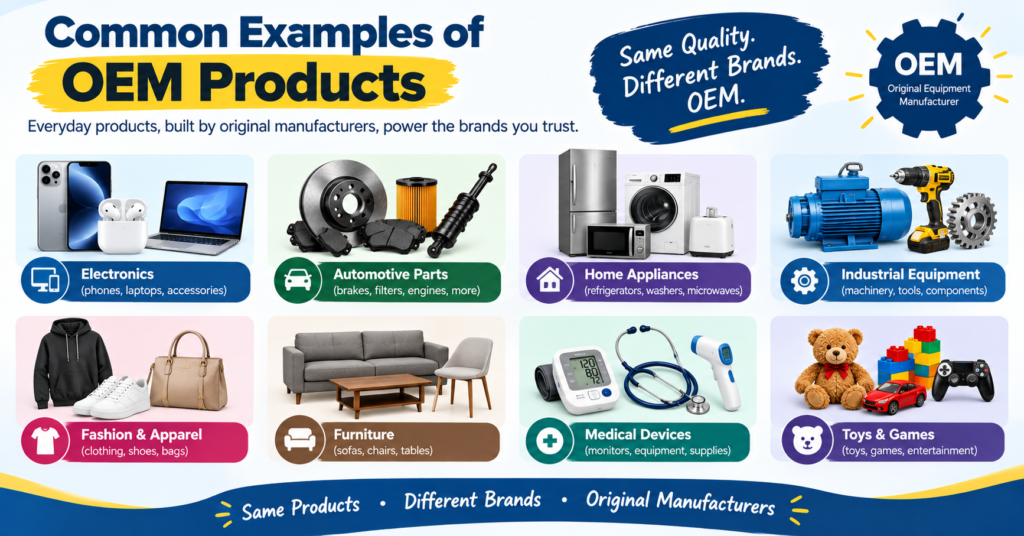
OEM relationships show up across many industries, even though most people never see the OEM’s name on the final product. A few common examples:
- Automotive: A car brand doesn’t manufacture every part in-house. Spark plugs, batteries, and electronics are often sourced from OEM suppliers, then installed during assembly.
- Computers and electronics: Laptop brands buy processors, memory chips, and displays from OEM component makers.
- Smartphones: A well-known example is contract manufacturing, where a phone brand designs the device and an OEM factory physically produces it.
- Software: Some operating systems are supplied by an OEM to be pre-installed on new computers before they’re sold to customers.
- Appliances: Many kitchen and home appliance brands source internal components, like motors or compressors, from specialized OEMs.
In every case, the pattern is the same: one company builds the part, and another sells the finished, branded product.
OEM Parts: Pros and Cons
OEM parts have clear strengths, but they aren’t always the perfect choice for every situation. Here’s a quick look at both sides.
Pros of OEM parts:
- Guaranteed to match the original specifications
- Generally higher and more consistent quality
- Often covered by manufacturer warranties
- Easier compatibility with the original product
Cons of OEM parts:
- Usually more expensive than aftermarket options
- Can be harder to find for older or discontinued products
- Limited choice, since only the original manufacturer supplies them
- Sometimes require going through official dealers or authorized sellers
Choosing between OEM and aftermarket often comes down to priorities. If reliability and warranty matter most, OEM is usually the safer bet. If budget is the main concern, a trusted aftermarket part can still work well.
Why OEM Matters When Buying Replacement Parts
Understanding OEM becomes especially useful when you need to replace a broken part, whether it’s for a car, appliance, or electronic device. Knowing the source of a part directly affects what you’re paying for.
- Quality assurance: OEM parts are built to the same standard as the original component, reducing the risk of poor fit or early failure.
- Warranty protection: Using OEM parts can help preserve manufacturer warranties, since some warranties are voided by non-original parts.
- Long-term reliability: OEM parts are tested to work specifically with your exact model, lowering the chance of compatibility issues.
- Resale value: Vehicles and electronics maintained with OEM parts often hold their value better than those repaired with generic parts.
That said, OEM isn’t always necessary for every repair. For lower-stakes replacements, a reputable aftermarket part can offer solid performance at a lower cost.
Frequently Asked Questions About OEM
What does OEM stand for?
OEM stands for Original Equipment Manufacturer, a company that makes parts or products used in another company’s branded goods.
Is OEM the same as the brand you buy from?
No. The OEM makes the part, while the brand you buy from (the VAR) assembles and sells the finished product under its own name.
Are OEM parts better than aftermarket parts?
OEM parts usually offer more consistent quality and better warranty support, but aftermarket parts can still work well and often cost less.
Can I use aftermarket parts without voiding my warranty?
It depends on the manufacturer’s policy — some warranties require OEM parts, while others allow aftermarket alternatives.
Where can I buy genuine OEM parts?
OEM parts are typically available through authorized dealers, the original brand’s website, or approved retailers.
Does OEM only apply to cars and electronics?
No. OEM relationships also exist in appliances, software, medical equipment, and many other manufacturing industries.
Conclusion
OEM stands for Original Equipment Manufacturer, a company that builds parts or products used inside another company’s branded goods. Understanding this term helps you know exactly where a product or part comes from, which can influence quality, pricing, and warranty coverage. Whether you’re buying a replacement part or just researching how manufacturing works, knowing the difference between OEM and aftermarket puts you in a better position to make an informed choice.
