

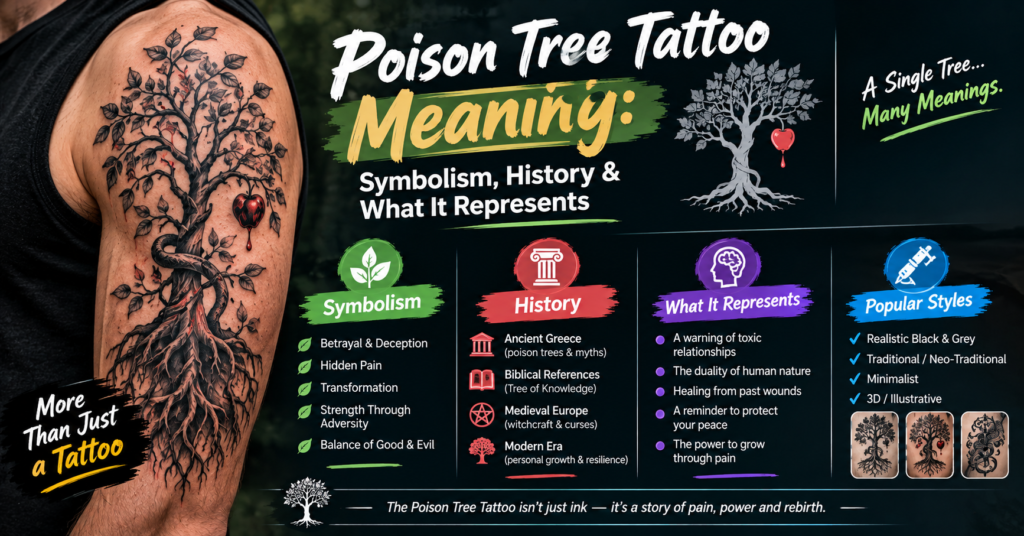
Poison Tree Tattoo Meaning: Symbolism, History & What It Represents Poison tree tattoos catch the eye because they mix beauty and danger in one image. A tree usually stands for life and growth. But when it’s called a “poison tree,” it carries a darker twist. This mix makes it a popular choice for people who want deeper meaning in their ink.The idea often comes from old poems, myths, and even the Bible. Many people link it to William Blake’s poem “A Poison Tree,” which talks about hidden anger and revenge. Others see it as a symbol of toxic people or bad habits. The tree can also represent secrets that grow if left unspoken.This tattoo isn’t just about looking edgy. It can show personal growth after pain, or a warning to stay away from harmful things. Some people get it to mark a lesson learned the hard way. Others simply love the dark, gothic look of a twisted tree. Whatever the reason, this design carries real weight and story behind it.
What Does a Poison Tree Tattoo Actually Symbolise?
At its core, a poison tree tattoo stands for feelings that grow when they are pushed down instead of spoken out loud. Anger, jealousy, and resentment are the main emotions tied to this design. The tree looks alive and strong on the outside, but it hides something harmful inside.
Many wearers pick this tattoo to mark a personal turning point. It can represent:
- Anger that was never expressed
- A toxic relationship or friendship
- Betrayal that left a lasting mark
- The moment someone chose to let go of bitterness
- Inner healing after a painful chapter
Some people wear it as a warning to themselves. Others wear it as proof that they survived something dark and came out stronger.
The Origins of the “Poison Tree” Idea in Literature and Folklore
The poison tree is not a new idea. Cultures around the world have used trees to explain human emotion for centuries. In old folklore, a tree with strange or dangerous fruit often stood for temptation or a hidden trap.In ancient stories, a beautiful tree bearing harmful fruit was a common way to talk about deception. The message was simple: things that look appealing on the surface can still cause harm underneath. This same idea carried into religious texts, poetry, and later, tattoo art.Over time, the poison tree became less about literal danger and more about emotional danger. It shifted from a warning about nature to a warning about the human heart.
William Blake’s “A Poison Tree” and Its Lasting Influence
The tattoo’s most direct link is to a short poem written in the late 1700s by English poet William Blake. The poem is part of his larger collection exploring innocence and darker human experience.The story is simple. The speaker feels anger toward a friend, talks about it, and the anger fades away. But with an enemy, the speaker stays quiet. That silence feeds the anger until it grows into a tree. The tree eventually produces fruit, and that fruit ends up causing harm.The poem’s real lesson is about what happens when people bottle things up instead of talking them out. That message still feels relevant today, which is why so many people connect with it through ink. A poison tree tattoo becomes a personal reminder: speak up before resentment takes root.
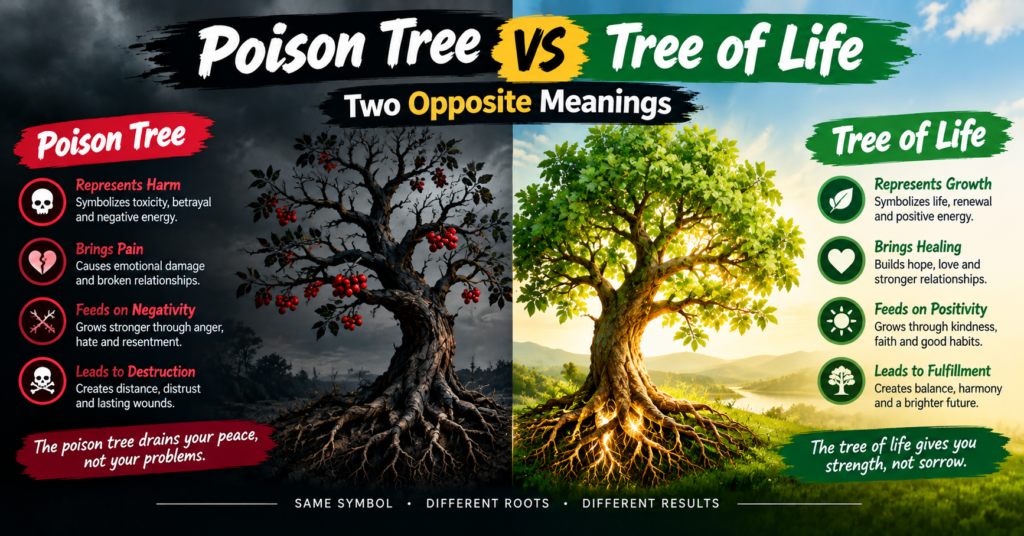
Poison Tree vs. Tree of Life: Two Opposite Meanings
Both designs use a tree as the main symbol, but they send very different messages. Understanding the contrast helps explain why the poison tree feels so striking.
| Feature | Tree of Life | Poison Tree |
|---|---|---|
| Core meaning | Growth, family, connection | Suppressed anger, hidden pain |
| Emotional tone | Positive, hopeful | Dark, cautionary |
| Common symbols | Roots, branches, sun | Apples, thorns, crows |
| Typical audience | Those honoring family or new beginnings | Those processing pain or betrayal |
| Overall message | Life continues and connects everything | Unspoken feelings can turn harmful |
The tree of life celebrates connection. The poison tree warns about what happens when connection breaks down and feelings stay buried.
Common Design Styles for Poison Tree Tattoos
This tattoo works well in several art styles, and the chosen style can change how the meaning comes across.
- Blackwork – bold, heavy lines that give the tree a dramatic, shadowy look
- Realism – detailed bark, leaves, and fruit that look almost photographic
- Minimalist – a simple outline of a twisted tree with little detail
- Gothic/dark art – paired with skulls, crows, or a full moon for extra intensity
- Watercolor – soft color washes that soften the tree’s harsh meaning
Each style tells the same story in a different tone. A minimalist version feels quiet and personal, while a gothic piece feels loud and unapologetic.
What the Apples (or Fruit) on the Tree Represent
The fruit is often the most important detail on this tattoo. In Blake’s poem, the tree grows a single bright apple that eventually causes harm. That apple represents the final result of bottled-up anger.
On skin, the fruit usually symbolizes:
- The “final product” of long-held resentment
- A tempting mistake that looks harmless at first
- A secret that has fully formed and can no longer be ignored
Some designs show a full, glowing apple. Others show fruit that looks rotten or cracked, hinting at decay hidden behind a nice appearance.
Roots, Branches, and Leaves: Reading the Details
Every part of the tree adds its own layer of meaning, so the small details matter just as much as the overall shape.
- Roots often represent where the pain started, or a person’s foundation
- Twisted or gnarled branches suggest inner turmoil and years of built-up tension
- Bare branches can hint at loss, isolation, or emotional exhaustion
- Full leaves can represent growth happening even through hardship
- Cracked bark is used to show visible scars or struggle
Tattoo artists often mix these elements to match a client’s personal story. A tree with strong roots but broken branches, for example, can show someone who stayed grounded despite going through something difficult.
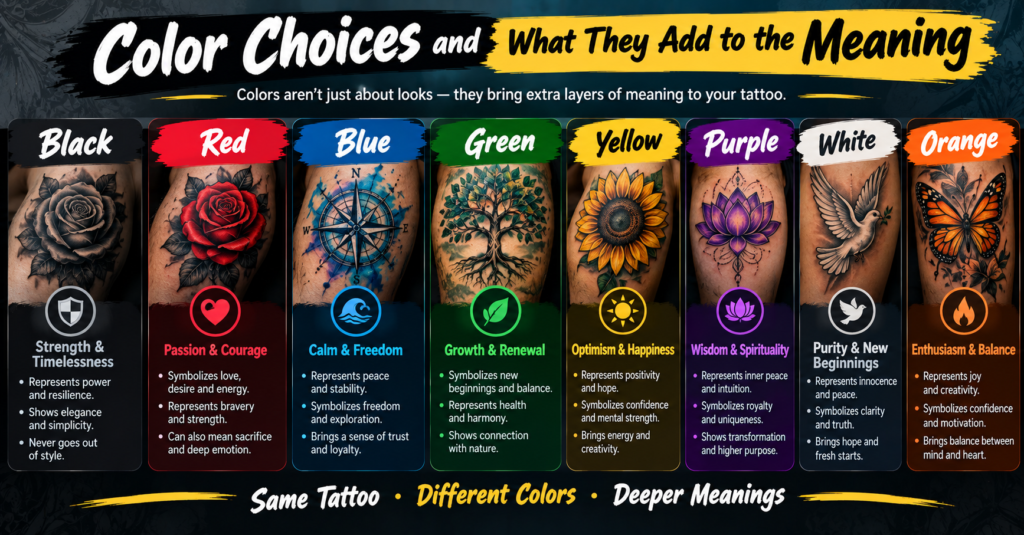
Color Choices and What They Add to the Meaning
Color changes the emotional weight of this tattoo. A black-and-grey poison tree feels heavier and more serious, while adding color can soften or shift the message entirely.
| Color | What It Often Adds |
|---|---|
| Black/grey | Classic, moody, focused on the darker meaning |
| Deep red | Intense emotion, anger, or passion |
| Green | Growth, healing, or a nod to nature |
| Purple | Mystery, transformation, or spirituality |
| Gold/yellow | Highlights the “bright apple” from Blake’s poem |
Many people keep the tree itself in black ink and only add color to the fruit. This draws the eye straight to the tattoo’s most symbolic detail.
Popular Placement Ideas for This Tattoo
Placement plays a big role in how bold or private this tattoo feels. Some spots make a loud statement, while others keep the meaning more personal.
- Forearm – highly visible and easy to show off
- Upper arm or shoulder – gives space for larger, detailed designs
- Back – ideal for big pieces with roots, branches, and extra elements
- Ribcage – more private, often chosen for deeply personal meanings
- Calf or thigh – offers a long, narrow canvas that fits a tall tree shape
Larger placements like the back or thigh allow more detail, while smaller spots like the wrist or forearm work better for simple, minimalist versions.
Poison Tree Tattoos in Pop Culture and Media
This design has grown beyond literature fans. It now shows up across music, films, and online tattoo communities, often linked to themes of hidden emotion or dark transformation.Musicians and artists have referenced the “poison tree” concept in lyrics and album art, which has helped introduce the symbol to new audiences. Tattoo galleries and social media pages also frequently feature this design, often paired with quotes from Blake’s poem or personal captions about overcoming anger. This visibility has helped the tattoo grow from a niche literary reference into a widely recognized design choice.
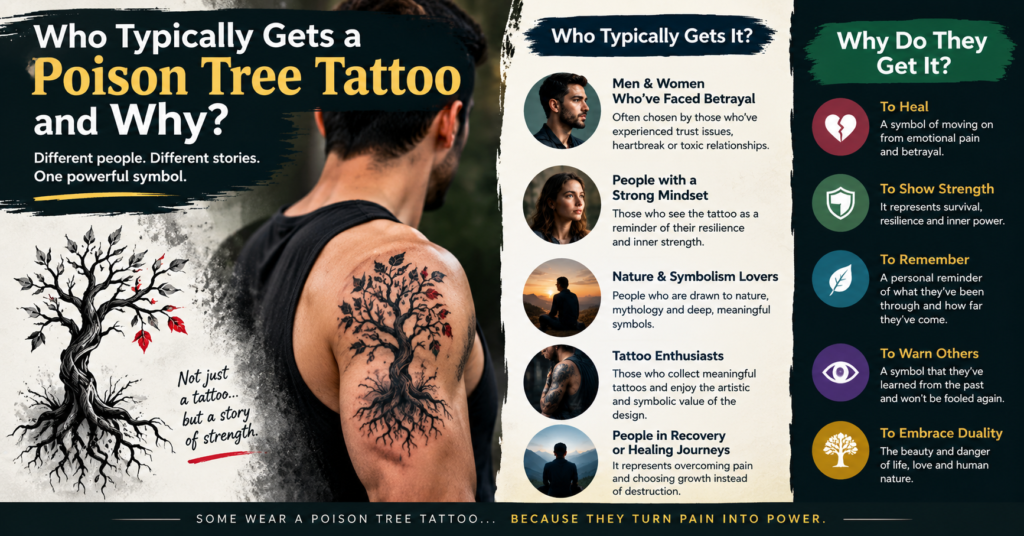
Who Typically Gets a Poison Tree Tattoo and Why
This tattoo tends to appeal to people who value symbolism over simple decoration. Common reasons people choose it include:
- Recovering from a betrayal or toxic relationship
- Marking a personal decision to stop suppressing emotions
- Honoring a difficult chapter they’ve moved past
- Simply loving Blake’s poem and its message
- Being drawn to gothic or nature-inspired tattoo art
It’s a design that often means something private, even when it’s placed somewhere visible.
Things to Consider Before Getting One
Before booking this tattoo, it helps to think through a few practical points.
- Know your “why.” A tattoo this symbolic feels more meaningful when tied to a real personal reason.
- Choose the right artist. Detailed bark, roots, and fruit require someone skilled in fine linework or realism.
- Think about size and placement. More detail needs more space.
- Decide on color early. Color affects healing time and future touch-ups.
- Consider how public you want it. Visible spots invite questions; private spots keep the story to yourself.
Taking time on these details helps the final tattoo match both the look and the meaning you want.
Conclusion
A poison tree tattoo is far more than a dark aesthetic choice. It carries centuries of symbolism, from old folklore to William Blake’s powerful poem about buried anger. Whether someone chooses it to mark healing, warn against toxicity, or simply honor a piece of literature they love, this design holds real emotional depth. With so many ways to customize the roots, fruit, color, and placement, no two poison tree tattoos tell quite the same story.
Frequently Asked Questions
What does a poison tree tattoo symbolise?
It mainly symbolizes suppressed anger, hidden resentment, and the harm that grows when emotions are never expressed.
Where does the poison tree symbol come from?
It comes from old folklore about deceptive fruit, most famously popularized by William Blake’s 1794 poem “A Poison Tree.”
Does a poison tree tattoo always have a negative meaning?
No, many people use it to represent healing, personal growth, or overcoming a painful experience rather than negativity itself.
What’s the best placement for a poison tree tattoo?
The forearm, back, and thigh are popular choices since they offer enough space for roots, branches, and fruit detail.
Can I add color to a poison tree tattoo?
Yes, color is common, especially on the fruit, and can add meaning like passion, growth, or mystery to the design.
Is this tattoo based on a real poisonous tree?
Not usually. It’s a symbolic tree inspired by poetry and folklore rather than any specific real-world poisonous species.
